
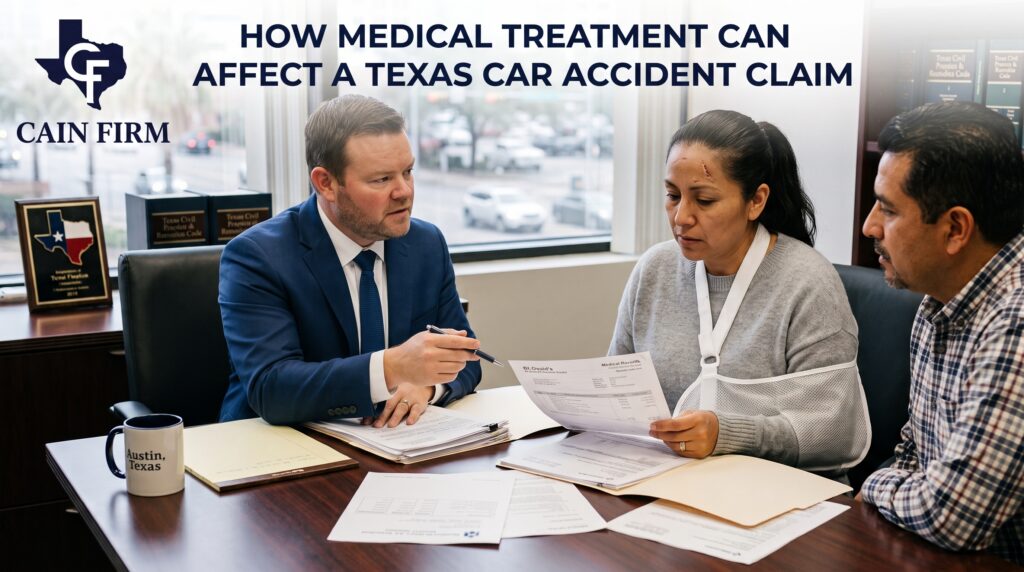
Your first priority after being involved in a car accident is not to worry about a claim, its possible value, or even your insurance company, but rather about your health and condition. You might not know the extent of your injuries at once and need to get proper medical care to assess your condition. In some cases, the symptoms and pain can arise after several hours or days following the accident.
Medical treatment could impact a car accident claim in several ways. In particular, treatment can prove the existence of an injury, establish a connection between your condition and the accident, and show its consequences. On the other hand, some facts about treatment, missed doctor visits, or statements in medical records may become grounds for the insurance company to cast doubts about the injury or deny the claim.
This article explains how medical care can influence a Texas car accident case and what injured people should know.
Important: This guide gives general information, not legal advice. Every accident and injury have unique characteristics. If you have suffered an injury in a car accident, you should consult a qualified Texas personal injury attorney to discuss the specifics of your situation.
Why Medical Treatment Matters After a Car Accident
Medical records often provide objective information about an accident victim’s condition. They may show:
- The first time when the victim reported the symptoms
- The types of injuries that were diagnosed
- What tests were performed on the victim
- What treatment was prescribed
- Whether the patient has followed the recommendations
- Whether the injury impacted the victim’s work, sleep, mobility, or regular activities
- The victim’s progress: improvement, stabilization, or worsening of his/her condition
This information can clarify the chain of events regarding your injuries. You might feel just shaken by a collision and notice neck, shoulder, back, or head pains only hours or days later. Delayed symptoms do not mean that the injury is unrelated to the accident. However, the longer a person waits with obtaining medical care, the higher chances are that the insurer will doubt the relation.
Seeking medical attention is not about creating a claim. It is about receiving appropriate care and documenting what happened.
Should You Go to the Emergency Room?
Emergency-room care may be appropriate when an accident causes serious or concerning symptoms, including:
- Unconsciousness
- Behavior changes
- Strong headache
- Recurrent vomiting
- Pains in the chest and abdomen
- Troubles with breathing
- Weakness or numbness
- Severe pains in the neck or back
- Active bleeding
- Suspicion of bone fractures
- Difficulty in walking or moving an arm or leg
You should listen to the recommendations of the hospital employees. If your symptoms are not dangerous for your life but do not disappear, you should see a doctor as soon as possible.
You should not ignore your symptoms simply because the damage to your car is not serious. There is no link between the degree of car damage and severity of an injury.
What If You Did Not Feel Injured at the Scene?
The adrenaline rush after a collision can mask the pain for some time. There are some types of injuries that are not visible right away, such as whiplash, soft-tissue injuries, and some types of traumatic brain injury.
If symptoms appear later, write down:
- When you first noticed them
- What the symptoms feel like
- Whether they are getting better or worse
- What activities make them worse
- Whether they affect your work, sleep, driving, or household responsibilities
Then you should see a doctor and tell everything about your condition and accident in details, avoiding understatements or exaggerations.
How a Treatment Gap Can Affect Your Claim
A treatment gap is a period when an injured person stops receiving medical care or waits a significant amount of time before obtaining it. Insurance companies may argue that:
- The injury was not serious
- The accident did not cause the injury
- The person recovered
- Another event caused the symptoms
- The medical bills are not connected to the collision
There are many reasons why treatment gaps could happen in Texas car accident cases. Among others, they include the lack of insurance, transportation issues, financial difficulties, busy schedule, or inability to get an appointment.
If you cannot go to an appointment, contact the office of a medical provider and check whether the appointment can be rescheduled according to their recommendations. If money is an issue, discuss it with a provider or consult a lawyer first.
Following Your Doctor's Recommendations
An insurance company may analyze whether a claimant has followed reasonable medical recommendations. The absence of attendance at doctor appointments, refusal of testing or treatment without consulting a provider, or stopping the treatment without explanation can be used against a claimant.
However, you do not have to follow every recommendation of a provider. You and your provider make the decision regarding your health and treatment options. If you have some doubts about the recommendation, you should talk to your provider and ask questions.
Medical Records Can Connect the Injury to the Collision
To evaluate a car accident claim, insurers and attorneys may look for a consistent connection between:
- Date of the accident
- Onset of symptoms
- Parts of the body that are in pain
- The injury diagnosis
- Treatment provided
- Expected period of recovery
When speaking to a doctor, explain how the accident occurred and list all your symptoms, even the minor ones. Tell the provider whether you had such symptoms before the collision. Providing such information will help the doctor with proper treatment and will avoid misunderstanding in the future.
Pre-existing Conditions Do Not Automatically Eliminate a Claim
There are people who have back pain, arthritis, surgery, or some other pre-existing condition. An insurance company can state that the collision did not cause the current symptoms.
However, a pre-existing condition is not a reason not to get compensation for worsening of the pre-existing condition as a result of the accident. Your medical history, medical bills, previous treatment, and doctor’s opinions may help to differentiate between your base condition and the new one.
You should inform your provider about your medical history truthfully. Failure to report your pre-existing condition can harm your credibility if the same information appears in medical or insurance records.
Medical Bills and the Value of a Claim
Medical expenses are one of the categories of damages that may be taken into account in a Texas personal injury claim. Based on the specifics of the case, a claim may also include:
- Lost income
- Limited ability to work
- Pain and suffering
- Emotional distress
- Disfigurement
- Physical impairment
- Future medical care
- Other expenses incurred as a result of the accident
Medical expenses are not the only criteria for calculating the value of a claim. Diagnosis, prognosis, and other damages can affect the value of the claim as well. There is no reliable way to calculate the value of a claim without analyzing all the details.
You should never undergo unnecessary treatment in order to increase the value of the claim. You should get medical care based on your health and recommendations of the doctor.
Who Pays for Treatment After a Texas Car Accident?
Depending on the circumstances, medical expenses may initially be handled through:
- Health insurance
- Medical payments insurance, if it is available in your auto insurance policy
- Special payment plans of the medical provider
- Some other source of the coverage depending on the case
Texas does not have the requirement of medical payments coverage for all drivers. You can check whether you have such insurance in your auto policy or ask a lawyer or an insurance professional about this issue.
If the health insurance company or the medical provider pays the accident-related bills, there might be some claims or liens regarding the payment of these expenses in the future. Before paying out the settlement, you should resolve these matters.
Keep More Than Just Your Medical Bills
Save copies of documents connected to your treatment, including:
- ER records
- Doctor notes
- Results of diagnostic tests
- Prescriptions
- Physical therapy records
- Medical bills
- Explanations of benefits
- Appointment confirmation letters
- Work restrictions
- Records of the expenses associated with transportation to the doctor
It would also be useful to keep a symptom journal to track all your symptoms. Note your pain level, activities you are unable to perform, sleeping problems, medications’ side effects, and your limitation in working or taking care of your family.
A symptom journal is not a replacement for medical records but can be helpful when talking to your provider or lawyer.
Be Careful With Insurance Company Communications
Soon after the accident, an insurance company adjuster may contact you asking about the accident, injuries, treatment, and your medical history.
You should provide accurate information, but avoid guessing or making broad statements such as:
- “I am completely okay.”
- “This accident was minor.”
- “I do not know whether I will need medical treatment.”
- “This injury is probably not severe.”
You may not know the extent of your injuries at once after the accident. Before giving a recorded statement or signing a medical authorization, you should consider getting legal advice. The broad authorization may give an insurance company an access to any medical information regarding you that is not connected to the accident.
Texas Deadlines May Apply
Texas personal injury cases have a two-year statute of limitations, but there are some exceptions to it. The deadline depends on the type of the claim, the defendant, and other factors.
You should not assume that the ongoing medical treatment automatically extends the deadline. If you have suffered an injury in a Texas car accident, you should get legal advice regarding deadlines as soon as possible.
Common Questions About Medical Treatment and Texas Car Accident Claims
How soon should I see a doctor after a car accident?
If you have symptoms or pains after a collision, you should immediately see a doctor. If you have emergency symptoms, you should call 911 or visit an emergency room. Even if you have mild symptoms, a professional can evaluate your condition and prescribe follow-up treatment.
Can I still bring a claim if I waited to get treatment?
Probably yes. Delay can raise some questions, but does not automatically prevent you from filing a claim. The reasons for delay, timing of the symptoms, diagnosis, and medical evidence may be important.
What if the insurance company says my treatment is unrelated?
An opinion of an insurance company is not the ultimate answer. The medical history, examination findings, test results, opinions of the providers, and timing of symptoms may help you to establish whether the treatment is related to the accident.
Do I have to use the doctor chosen by the insurance company?
Generally, you have the right to choose your healthcare provider. Do not let an insurance company to put pressure on you and force you to make medical decisions that are not based on your condition.
Can I settle before finishing treatment?
Settlement before the completion of treatment is possible, but can be risky if you do not know the extent of your injuries and future medical needs. Once the case is settled, it will be impossible to claim the additional compensation for the same accident.
Does medical treatment guarantee compensation?
No. Medical treatment is important for your health and may be the source of the evidence of the injury, but does not guarantee a settlement or verdict. Liability, causation, damages, insurance coverage, deadlines, and other issues may affect the outcome.
Steps to Take After an Accident
After a Texas car accident:
- Get emergency care when it is required.
- Arrange a medical examination for ongoing or developing symptoms.
- Inform your provider about all the symptoms and pre-existing conditions.
- Follow reasonable treatment recommendations.
- Keep medical records, prescriptions, bills, and appointment confirmations.
- Record the impact of the injury on your work and activities.
- Do not post anything about the accident and your recovery on social media.
- Think twice before giving recorded statements or signing any authorizations.
- Learn about the deadlines for your claim.
- Consider consulting a Texas car accident lawyer about your situation.
How the Cain Firm May Help
The Cain Firm represents injured people in Fort Worth, Granbury, Dallas-Fort Worth, and throughout Texas. Our team can analyze the accident, medical treatment, communication with insurance company, and other available information to give you a detailed analysis of your legal rights. cainfirm.com
Consultation does not reduce the importance of your healthcare provider’s advice. Your treatment should be aimed at your recovery, but legal advice may help you to understand how the medical records and accident-related expenses can affect your claim.
Contact the Cain Firm to request a consultation on your Texas car accident.
This article is provided for general informational purposes only and does not constitute legal advice or create an attorney-client relationship. Laws change and every case is different. For advice about your specific circumstances, please consult a licensed Texas attorney.


