
Fort Worth Motorcycle Accident Lawyers
Protecting Injured Texas Riders and Fighting for Maximum Compensation

— Nancy L.

Frequently asked questions about Texas motorcycle accidents
- What should I do at the scene of a motorcycle crash in Fort Worth?
- Should I speak to the other driver involved?
- What should I do if the other driver denies fault?
- What evidence is important in a motorcycle accident case?
- What are common motorcycle accident injuries?
- What are common causes of motorcycle accidents in Texas?
- What is dooring?
- What damages can I recover?
- Who can be held liable in a motorcycle accident case?
- How does Texas helmet law affect a motorcycle accident claim?
- Can I still recover compensation if I wasn’t wearing a helmet?
- How long do I have to file a motorcycle accident lawsuit in Texas?
- How can our Fort Worth motorcycle accident Attorney help your case?
What should I do at the scene of a motorcycle crash in Fort Worth?
- Move to a safe location, if possible: Texas highways, especially high-traffic areas like I-20 and US-287, can be extremely dangerous. If you can move, get out of traffic.
- Call 911 and report the accident: Fort Worth police and emergency responders need to document the accident and provide medical help. Ask for a copy of the police report.
- Get medical attention: Motorcycle injuries aren’t always immediately obvious. Visit a local trauma center like Texas Health Harris Methodist or JPS Hospital to get checked out.
- Document the accident: Take photos of the crash scene, vehicle damage, skid marks, traffic signs, and your injuries—especially at intersections like University Drive & W. 7th Street, where crashes are common.
- Collect driver and witness information: If a driver caused your crash on West Freeway or North Main Street, get their insurance details, license plate, and contact information. Also, gather witness statements.
- Speak with an attorney: Motorcycle riders are often blamed unfairly in crashes. A lawyer can protect your rights and ensure insurance companies don’t take advantage of you.
Should I speak to the other driver involved?

MEET OUR ATTORNEY
Brett Cain
What should I do if the other driver denies fault?
- Stay calm and avoid confrontation: Do not argue with the other driver at the scene. Remain composed and let the evidence speak for itself.
- Gather evidence at the scene: Take photos of damage, road conditions, traffic signals, and injuries. If the accident happened at a dangerous intersection like Lancaster & Riverside, document obstructions or hazards.
- Obtain witness statements: If there were any bystanders or other drivers who witnessed the accident, collect their contact information and ask them to provide statements.
- Request a police report: Ensure the responding officer files an official report. Police reports can often include observations about fault and serve as valuable evidence.
- Consult an attorney: A lawyer can help investigate the accident, analyze the evidence, and work to counter the other driver’s denial of fault.
What evidence is important in a motorcycle accident case?
- Photos and videos of the scene: Document the accident site, including vehicle damage, skid marks, road conditions, traffic signs, and any visible injuries.
- Witness statements: Gather contact information and statements from anyone who saw the crash. Their testimony can support your version of events.
- Police report: Obtain a copy of the official accident report, which may contain details about fault and other important observations.
- Medical records: If you were treated at JPS Hospital or Baylor Scott & White, save all diagnoses, X-rays, and prescriptions.
- Black box or event data recorder information: If the other vehicle involved was equipped with a black box, the data can provide insight into speed, braking, and other factors leading up to the crash.
- Helmet and gear damage: Keep any damaged protective gear, such as your helmet or jacket, as it can illustrate the force of the impact.
What are common motorcycle accident injuries?
- Traumatic brain injuries (TBIs): Even with a helmet, a bad fall or crash can cause serious brain injuries, leading to lasting effects on thinking, memory, or movement.
- Spinal cord injuries: Damage to the spine can cause paralysis, making it difficult or impossible to move parts of the body. These injuries often need ongoing care.
- Broken bones and fractures: Riders often break bones in their arms, legs, or ribs during a crash, and these injuries can need surgery and long recovery periods.
- Road rash: Sliding across the pavement can cause painful skin burns and abrasions, sometimes leading to infections that need medical treatment.
- Internal injuries: Injuries to internal organs can happen from the impact of the crash, sometimes showing up later but needing urgent care.
- Amputations: In some accidents, limbs may be crushed or lost, and this may require prosthetics and ongoing medical care.
- Biker’s arm: When riders try to break their fall by putting their arm out, they can suffer nerve damage, which can weaken the arm or cause it to become paralyzed.
What are common causes of motorcycle accidents in Texas?
- Speeding and reckless driving: Excessive speed and dangerous maneuvers, such as lane splitting or sudden lane changes, significantly increase the risk of collisions.
- Driver negligence: Motorists who fail to check blind spots, signal lane changes, or pay attention to the road often cause severe accidents involving motorcyclists.
- Poor road conditions: Hazards like potholes, debris, and uneven pavement can destabilize motorcycles, making road maintenance a crucial safety factor.
- Driving under the influence: Alcohol or drug impairment impairs judgment and reaction time, contributing to many preventable crashes.
- Vehicle malfunction: Mechanical failures, such as brake issues or tire blowouts, can lead to sudden loss of control, emphasizing the importance of regular maintenance.
- Weather conditions: Rain, wind, or extreme heat can create hazardous riding conditions, requiring motorcyclists to exercise extra caution.
- Open car doors: Parked car occupants who open doors without checking for oncoming traffic pose a significant risk to passing motorcyclists.
- Inexperienced drivers: Novice drivers, particularly teenagers, may lack the skills or attention needed to safely share the road with motorcyclists.
- Poor visibility: Low light conditions, obstructions, or inclement weather can make it harder for drivers to spot motorcyclists, increasing the likelihood of accidents.
What is dooring?
- Magnolia Avenue: Where street parking is common
- West 7th Street: A popular entertainment district
- TCU-area streets: Where students often park along busy roads
What damages can I recover?
- Medical expenses: This includes emergency care, hospital stays, surgeries, medication, and any other necessary treatment related to your injuries.
- Rehabilitation costs: Ongoing physical therapy, occupational therapy, or other specialized care needed for your recovery.
- Lost income: Compensation for wages you’ve lost due to time spent recovering from your injuries.
- Loss of earning capacity: If your injuries prevent you from earning at the same level in the future, you can seek damages for the income you’ll miss out on.
- Property damage: Reimbursement for the repair or replacement of your motorcycle, helmet, and other gear.
- Pain and suffering: Compensation for the physical pain and emotional anguish caused by the accident.
- Emotional distress: Awards for the psychological impact of the crash, such as anxiety, depression, or trauma.
- Loss of enjoyment of life: Damages for the diminished ability to enjoy activities and hobbies you once loved.
- Medical expenses related to your loved one’s fatal injuries
- Funeral and burial costs
- Loss of the deceased’s financial support and income
- Loss of companionship and guidance
- Loss of inheritance and other related damages
Who can be held liable in a motorcycle accident case?
- Other drivers: Negligent drivers, such as those who are distracted, intoxicated, or fail to observe traffic rules, can be held liable for accidents involving motorcyclists.
- Motorcycle manufacturers: If a defective motorcycle part causes an accident, the manufacturer may be held responsible for injuries or damages.
- Road maintenance authorities: Poorly maintained roads, such as those with potholes or debris, can make the entity responsible for road upkeep, like local governments, liable.
- Employers: If the motorcyclist is involved in an accident while working, their employer may be liable under workers’ compensation laws.
- Government entities: Faulty road designs, malfunctioning traffic signals, or negligence in maintaining road safety may result in liability for government entities, though claims have specific rules and deadlines.
How does Texas helmet law affect a motorcycle accident claim?
- The other driver caused the accident, regardless of helmet use
- Your injuries would have happened anyway, especially if they involve your spine, arms, or legs
Can I still recover compensation if I wasn’t wearing a helmet?
How long do I have to file a motorcycle accident lawsuit in Texas?
- Traffic camera footage, common in Fort Worth, may be deleted after a few months
- Witnesses become harder to locate if too much time passes
- Insurance companies delay settlements, hoping you miss the deadline
How can our Fort Worth motorcycle accident Attorney help your case?
- Thorough investigation: We’ll dive deep into the accident to understand exactly what caused it, including gathering key details and expert insights.
- Evidence collection: We’ll gather critical evidence like police reports, witness statements, and video footage to build a strong case on your behalf.
- Identifying liable parties: We’ll identify everyone responsible for your injuries and prove how their actions or negligence led to the accident.
- Assessing damages: We’ll carefully evaluate the full extent of your injuries, medical expenses, lost wages, and other damages to ensure you’re compensated fairly.
- Negotiating with insurance companies: Our experienced Attorney will fight on your behalf during negotiations to make sure insurance companies don’t minimize your claim or offer less than you deserve.
- Trial representation: If a fair settlement can’t be reached, we’ll represent you in court, advocating fiercely for the compensation you’re owed.
Contact a motorcycle accident lawyer in Fort Worth today
If you’ve been injured in a motorcycle accident in Texas, you deserve more than compensation—you deserve justice. At the Cain Firm, our motorcycle accident lawyers believe in holding negligent parties accountable and righting the wrongs caused by their actions. We’re here to guide you through the legal system, fight for your rights, and ensure you receive the compensation you need to rebuild your life.
Motorcycle Accident Blog Posts:
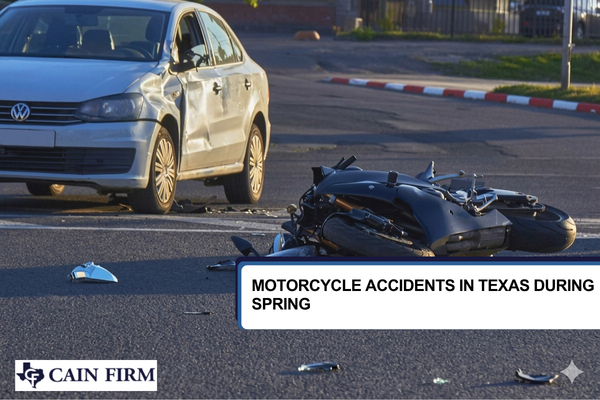
Motorcycle Accidents in Texas During Spring: What Riders Should Do After a Crash to Protect Their Injury Claim
Spring in Texas sees a rise in motorcycle accidents due to increased riders, rain, and distracted drivers. If you crash,
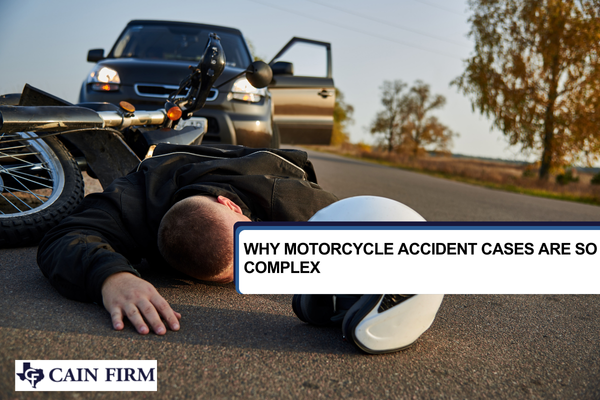
Why Motorcycle Accident Cases Are So Complex and How to Build a Strong Claim After an Accident
Met with a motorcycle accident in Texas? These claims are complex due to unique state laws, potential prejudice against riders,
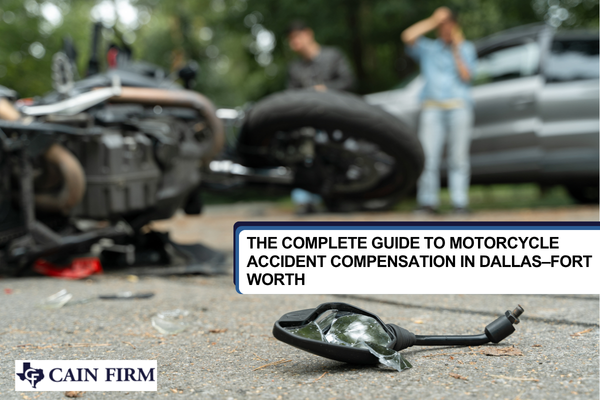
The Complete Guide to Motorcycle Accident Compensation in Dallas–Fort Worth
Were you hurt in a motorcycle accident in Dallas–Fort Worth? This blog from The Cain Firm explains what to do


